


Guides and Technical Advice
16 October 2026
Every open door is a leak in your building. Here is where the energy goes when an opening is used, and how a fast-cycling door helps you keep it.
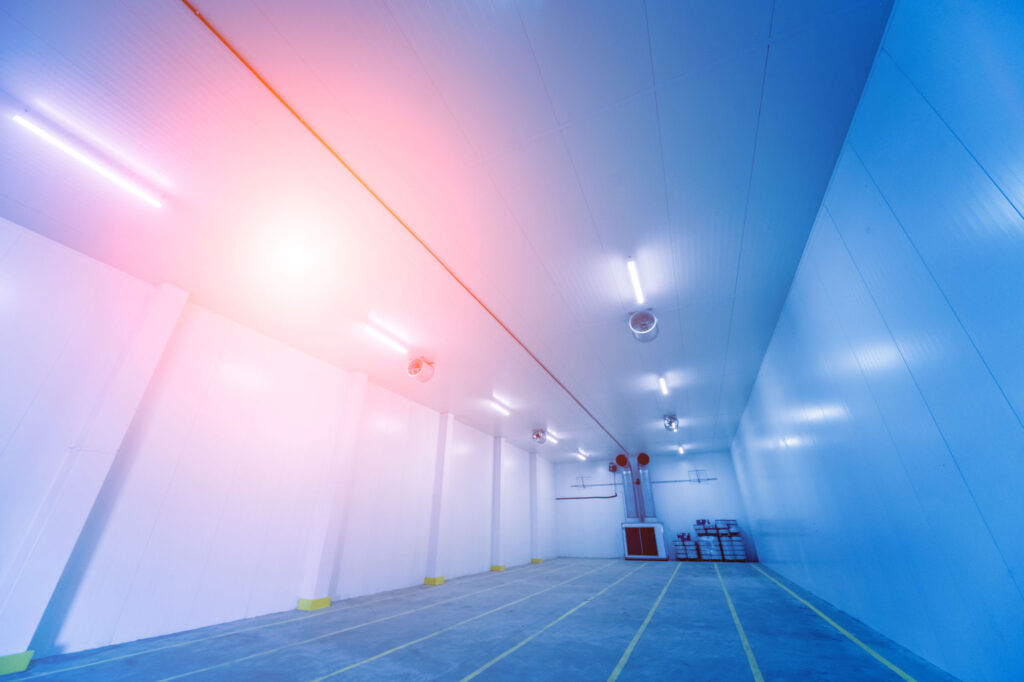
Every time a door opens between two spaces at different temperatures, air moves. Warm air flows into a cold room, cold air spills out of a freezer, and heated air escapes from a warehouse. Your refrigeration, heating or cooling equipment then has to make up the difference. The larger the opening and the bigger the temperature difference, the more air moves.
Time is the factor you can control. The longer an opening stays open, the more air is exchanged, so the speed at which a door opens and closes, and how long it stays open, matter more than most people expect.
A conventional door that takes many seconds to open and close spends much of each cycle partly or fully open. A high speed door cuts that time. AUTO-FULL®, for example, opens at up to 2 m/s, so the opening is exposed for only as long as the traffic needs. Over hundreds of passages a day, the difference adds up.
The worst case is not a slow door but a door that is left open, and doors get left open when they are slow or awkward to use. At Wilton Recycling, slow, manually operated shutters were left open all the time. The DUAL-AIR folding door that replaced them is built for continual use, so the opening is no longer kept open and is better protected against the weather. You can read the story in the Wilton Recycling case study.
In a chiller or freezer room, warm, humid air entering the room adds heat and moisture, which puts extra load on refrigeration equipment and can affect the stability of the stock. Our high speed cold storage and freezer doors combine rapid cycling with insulated curtains: AUTO-FRIGO for chiller rooms, AUTO-FREEZER for freezer rooms down to −25°C, and DUAL-FREEZER for the most demanding sub-zero applications.
Where an opening is very busy or the temperature difference is large, an air curtain adds a second barrier. It places a directed air blade across the opening on top of the same rapid-cycling curtain, which cuts thermal exchange and airborne contamination further than the door alone. GS Doors offers AC versions of AUTO-FULL, AUTO-FRIGO and AUTO-FREEZER; see our industrial air curtain doors.
The door is only part of the picture. The insulation of the curtain, the seals at the sides and bottom, how the door is triggered and how well it is maintained all influence how much air gets through. A door with worn seals, or a curtain that no longer closes fully, will leak whatever its speed, which is one more reason to keep to a regular maintenance routine.
We do not quote a standard percentage saving, because it depends on your temperatures, the size of the opening, the traffic through it and how the current door is used. What you can do is note how many times a day the opening is used, how long it stays open each time and the temperature difference across it. With those figures our technical team can recommend the right door for your site, and our guide to choosing the right high speed door explains the other factors to consider.
Share this article
Tell us about your opening and the temperatures on either side, and our technical team will recommend the right door.
Talk to our team